


A multi-vehicle collision can leave families in Kokomo dealing with serious injuries, unexpected loss, and unanswered questions about what comes next. When another driver’s actions cause a chain reaction on busy roads like U.S. 31 or along Markland Avenue, the aftermath often involves more than just one at-fault party.
Speaking with a Kokomo multi-vehicle car crash lawyer early helps protect your position while evidence stays fresh and insurance companies begin their investigations. Reach out to Vaughan & Vaughan for a free consultation. You’ll have a chance to talk through what happened and learn how an attorney can handle the legal side while you focus on healing and stability.
Key Takeaways: Kokomo Multi-Vehicle Car Crashes
- Multi-vehicle crashes involve more than two cars and often raise questions about shared fault.
- Indiana uses a modified comparative fault system that directly affects financial recovery.
- Insurance companies frequently dispute responsibility in pile-ups and chain reaction crashes.
- Strong evidence from multiple sources shapes how fault gets assigned.
- Acting promptly helps preserve records, witness memories, and legal options.
Your Case Will Get
The Attention It Deserves

What Are Multi-Vehicle Crashes in Indiana?
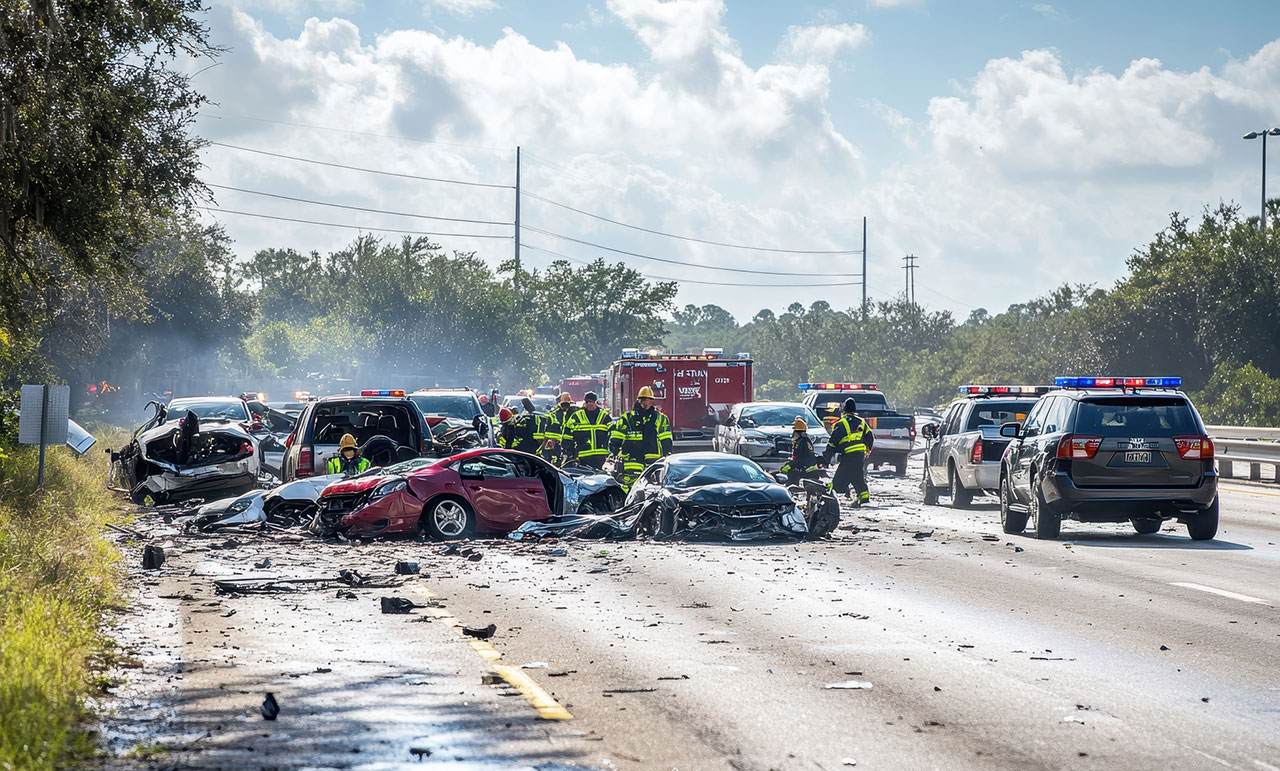
Multi-vehicle crashes involve three or more vehicles in a single incident. These collisions often unfold in seconds but lead to long-lasting consequences. Traffic volume, speed, and driver behavior all play a role in how these wrecks happen across Howard County.
Chain Reaction Collisions
Chain reaction collisions usually start when one driver fails to slow down and strikes another vehicle, setting off a sequence of impacts. Heavy traffic near South Reed Road during rush hour creates conditions where a single mistake spreads quickly to several cars.
Pile-Up Accidents
Pile-ups often occur on highways or major roads when visibility drops or traffic suddenly stops. Winter weather on State Road 22 sometimes leads to these large-scale crashes, especially when drivers follow too closely.
Intersection Crashes Involving Multiple Vehicles
At busy intersections, one driver running a red light can push vehicles into cross traffic. Areas near downtown Kokomo see these crashes when timing errors or distractions combine with steady traffic flow.

There is no fee
unless you win
What Makes Multi-Vehicle Accidents More Complex Than Two-Car Crashes?
Multi-vehicle accidents bring layers of responsibility that don’t exist in simpler collisions. Each added vehicle increases the number of stories, insurance policies, and legal arguments involved.
Multiple Parties and Insurance Companies
Every driver involved usually reports the crash to a separate insurer. Each company looks for ways to limit its own payout, which often leads to conflicting versions of events.
Disputed Liability Among Drivers
Drivers rarely agree on who caused the initial impact. One person may blame sudden braking, while another points to speeding or distraction. These disputes slow progress and raise the stakes of proper investigation.
Comparative Fault Under Indiana Law
Indiana law allows fault to be shared. Even careful drivers sometimes receive a percentage of blame, which directly affects financial recovery. Understanding how this system works matters in multi-car cases.



Who Can Be Held Liable in a Kokomo Multi-Vehicle Accident?
Liability doesn’t always stop with the driver who caused the first impact. Several parties may share responsibility depending on the facts.
All Drivers Involved in the Collision
Any driver whose actions contributed to the crash may bear part of the responsibility. Following too closely or driving while distracted often adds to fault calculations.
Commercial Trucking Companies
When a commercial truck is involved in the crash, the company behind that vehicle may share liability. Maintenance failures or unrealistic delivery schedules often come into question on stretches like County Road 300 South.
Government Entities for Road Defects
Poor road design, missing signs, or unrepaired hazards sometimes play a role. Claims against government entities follow strict notice rules, which makes early legal guidance valuable.
Vehicle Manufacturers for Defective Parts
Brake failures, tire blowouts, or airbag malfunctions can worsen a multi-vehicle crash. Product liability claims focus on whether a defect contributed to the harm.

What Does Indiana Law Say About Fault in Multi-Vehicle Crashes?
Indiana’s fault rules shape how claims move forward and how damages get divided among parties.
Indiana’s Modified Comparative Fault Rule
Under this rule, a person may pursue damages as long as their share of fault stays below a specific threshold. The percentage assigned reduces the final recovery amount.
The 51% Bar to Recovery
Once a person reaches 51% fault, Indiana law blocks recovery from other parties. Insurance companies often push blame toward injured drivers to reach this cutoff.
How Fault Is Allocated Among Multiple Parties
Judges, juries, or insurers assign fault percentages to each party. Evidence such as crash reconstructions and witness accounts guides this process.
What Damages Can You Recover After a Multi-Vehicle Crash in Indiana?
After a multi-vehicle crash, the losses often extend well beyond the damage you see at the scene. Indiana law allows injured people to pursue several categories of damages tied directly to how the collision affected their health, work, and daily life. Each category focuses on documenting real, measurable impacts rather than assumptions or general hardship.
Medical Expenses and Future Care Costs
Medical bills often form the foundation of a multi-vehicle crash claim. These damages account for both current treatment and care expected in the future. Examples include emergency room visits, hospital stays, surgery, physical therapy, prescription medication, and follow-up appointments. When doctors anticipate ongoing treatment or long-term care, those projected costs may also factor into the claim.
Lost Wages and Loss of Earning Capacity
Missed workdays quickly add up after a serious crash. Lost wage damages reflect the income you couldn’t earn while recovering. Some injuries also limit the type or amount of work you can do going forward. In those situations, a claim may address reduced earning capacity, which measures how injuries affect future income over time.
Pain and Suffering
Pain and suffering damages focus on how injuries affect daily living rather than bills or paychecks. This category may reflect ongoing discomfort, reduced mobility, sleep disruption, anxiety related to driving, or the inability to enjoy hobbies and family activities the same way as before. Medical records and personal testimony often support these claims.
Property Damage to Your Vehicle
Vehicle repair or replacement costs fall under property damage. This category also includes towing, storage fees, and rental car expenses while your vehicle remains unavailable. In multi-vehicle crashes, insurers sometimes dispute which impacts caused specific damage, making documentation especially helpful.
Together, these damages aim to present a clear picture of how the crash altered your finances and day-to-day life. Careful documentation strengthens each category and helps ensure the claim reflects the full scope of your losses.
How Long Do You Have to File a Multi-Vehicle Accident Claim in Indiana?
Most injury claims must be filed within two years from the crash date. Missing this deadline usually ends the legal claim.
Exceptions That May Extend the Deadline
Claims involving minors or government defendants sometimes follow different timelines. These exceptions depend on specific facts.
Why Acting Quickly Protects Your Rights
Early action preserves evidence and keeps options open. Delays give insurers more room to shape the narrative.
What Evidence Is Needed to Prove Multi-Vehicle Crash Cases?
Multi-vehicle crashes often produce competing accounts of how events unfolded. Strong evidence helps clarify the sequence of impacts and shows how each driver’s actions contributed to the collision. Gathering this information early gives claims a clearer foundation.
Police Reports and Accident Reconstructions
Police reports provide an initial summary of the crash, including diagrams, citations, and officer observations. In more serious cases, accident reconstruction analysis uses vehicle damage, skid marks, road conditions, and crash dynamics to explain how the collision progressed from the first impact through the final one.
Witness Statements from Multiple Perspectives
Each driver and bystander sees the crash from a different angle. Independent witness statements help confirm traffic signals, vehicle speeds, and driver behavior leading up to the collision. Statements collected soon after the crash tend to remain more accurate and detailed.
Traffic Camera and Dashcam Footage
Video evidence often captures key moments drivers may not remember clearly. Traffic cameras at busy intersections and dashcams inside vehicles sometimes record lane changes, sudden stops, or red-light violations that explain how multiple impacts occurred.
Cell Phone Records to Prove Distraction
Cell phone records show whether a driver used a phone at or near the time of the crash. Calls, texts, or app activity during those moments can support claims that distraction played a role in starting or worsening the collision.
How Do Insurance Companies Handle Multi-Vehicle Accident Claims?
Insurance companies approach multi-vehicle claims with caution and strategy.
Dealing with Multiple Insurance Adjusters
Each adjuster represents a different interest. Statements given to one insurer often reach others.
Tactics Used to Minimize Payouts
Adjusters may downplay injuries, question medical treatment, or assign higher fault percentages. These tactics aim to limit financial exposure.
The Importance of Not Accepting Early Settlement Offers
Early offers often arrive before the full impact of injuries becomes clear. Accepting too soon may leave future expenses uncovered.
What Should You Do Immediately After a Multi-Vehicle Crash in Kokomo?
The moments following a multi-vehicle crash often feel rushed and confusing. Taking clear, practical steps helps protect your health and preserves information that later matters to insurance claims and legal decisions.
Seek Medical Attention Even If Injuries Seem Minor
Adrenaline sometimes masks pain right after a crash. A medical evaluation documents injuries and connects them to the collision, even when symptoms appear later.
Document the Scene and All Vehicles Involved
Photos and videos taken at the scene provide valuable context. Capture vehicle damage, final resting positions, license plates, road conditions, traffic signals, and any visible injuries. When safe, write down the names and contact information of all drivers and witnesses.
Avoid Admitting Fault or Making Statements
Stress and shock affect how people describe events. Stick to basic facts when speaking with police and avoid speculating about who caused the crash when talking with other drivers or insurance representatives.
Report the Accident to Police and Your Insurer
A police report creates an official record of the crash, which later helps clarify details in multi-vehicle cases. Notify your insurance company promptly, share factual information, and avoid recorded statements until you understand how the claim may develop.
How Our Firm Can Help
Vaughan & Vaughan supports individuals and families after serious multi-vehicle crashes in Kokomo. We take over communication with insurance companies, gather records from every involved party, and organize evidence that explains how the collision unfolded. Our team works closely with medical providers and other professionals to document injuries, treatment needs, and financial losses. When insurers shift blame or minimize claims, we respond with detailed facts and clear legal arguments. Throughout the process, we keep you informed, answer questions promptly, and focus on protecting your interests at every stage of the case.
FAQs About Multi-Vehicle Car Crash Claims
How is fault determined when three or more cars are involved in a crash?
Investigators review police reports, witness statements, vehicle damage, and sometimes expert analysis to assign fault percentages to each driver.
Can I still recover compensation if I was partially at fault for a multi-vehicle accident?
Indiana law allows recovery as long as your fault stays below 51%. Any recovery reflects your assigned percentage of responsibility.
What if one of the at-fault drivers doesn’t have insurance?
Uninsured motorist coverage or claims against other at-fault parties may apply. An attorney reviews all available options.
How do multi-vehicle accidents involving commercial trucks differ from regular car crashes?
Commercial cases often involve federal regulations, company policies, and additional insurance coverage, which adds layers to the claim.
Should I hire a lawyer even if the other drivers’ insurance companies are being cooperative?
Cooperation can change as claims progress. Legal representation helps protect your interests if disputes arise later.
Contact Our Multi-Vehicle Car Accident Attorneys in Kokomo Today
Multi-vehicle crash cases move quickly once insurers begin assigning blame. Acting promptly helps protect evidence and strengthens your position. Vaughan & Vaughan brings decades of experience advocating for injured Hoosiers and holding responsible parties accountable. Reach out today for a free consultation and learn how our firm can support you during this difficult time.