



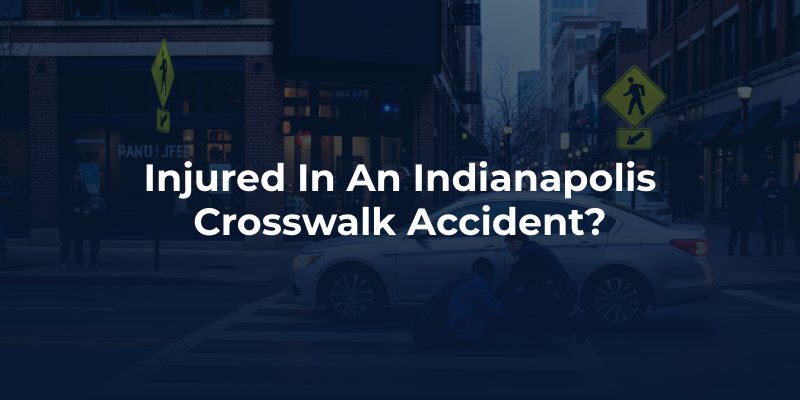
Crosswalk accidents are some of the most serious ones a person can experience. When a pedestrian is struck by a vehicle – or even a bicycle – the outcome is usually quite severe for the pedestrian because of the lack of protection they have during the incident. Recovery in these situations goes beyond physical healing, often involving medical bills, time away from work, and stress about what comes next.
Knowing local rules and what steps to take after a collision can help. If you were struck while using a crosswalk, it’s important to understand the legal options available to protect yourself. Call our team today to schedule a free case evaluation with an Indianapolis crosswalk accident lawyer from Vaughan & Vaughan.
Reasons to Choose Vaughan & Vaughan After an Indianapolis Crosswalk Accident
Having the right Indianapolis personal injury lawyer on your side can make a huge difference after you’re hit in a crosswalk. Vaughan & Vaughan stands out for several reasons that can matter a great deal during your case and recovery.
- We’ve secured millions of dollars for injury victims
- Our team is staffed by board-certified trial lawyers ready to fight for your claim in court if necessary
- We’ve been proudly representing people in Indiana since 1913
When you are facing pressure from insurance companies or just need answers about your options, our team is here for you and our record speaks for itself.
Your Case Will Get
The Attention It Deserves

Ways an Indianapolis Crosswalk Lawyer Supports Victims After an Accident
Victims dealing with the fallout of a crosswalk accident shouldn’t have to deal with the challenges alone. An experienced attorney brings essential support in these situations by taking the following steps:
- Gathers important evidence, including witness statements, police reports, and medical records
- Investigates the cause of the crash and determines which parties hold responsibility
- Handles communications and all negotiations with insurers so you don’t feel pressured or overwhelmed
With a skilled lawyer on your side, you can focus on yourself and your family while they handle the complicated legal process, giving you a better chance at a fair outcome.


Indiana’s Crosswalk Laws
Indiana’s crosswalk laws set clear rules for both pedestrians and drivers. Here are some important laws to know:
- During a “Walk” signal, you can cross and vehicles must yield.
(1) Flashing or steady “walk” means a pedestrian facing the signal may proceed across the roadway in the direction of the signal and a person who drives a vehicle shall yield the right-of-way to the pedestrian.
- If you see a flashing “Don’t Walk” (sometimes with a countdown), don’t begin crossing unless there’s enough time to reach safety.
(3) Flashing “don’t walk” means a pedestrian may not start to cross the roadway in the direction of the signal. A pedestrian who has already started to cross on the “walk” signal shall proceed to a sidewalk or safety island. If a countdown pedestrian signal indication is also shown, a pedestrian may cross if the pedestrian is able to proceed to the sidewalk or safety island by the time the steady “don’t walk” signal is shown, and a person who drives a vehicle shall yield the right-of-way to the pedestrian.
- If you see a steady “Don’t Walk” do not start crossing the road. If you’re already crossing the road, you can continue to the other side.
(2) Steady “don’t walk” means a pedestrian may not start to cross the roadway in the direction of the signal. A pedestrian who has partially completed crossing on the “walk” signal shall proceed to a sidewalk or safety island while the “don’t walk” signal is showing.
- Cross only at marked crosswalks between stoplights unless signs say otherwise. Diagonal crossing is not allowed unless directed.
- If a sidewalk is there and safe, pedestrians have to use it. If not, walk on the shoulder or, if there’s none, at the very edge of the street facing the traffic.
- Don’t enter a roadway so suddenly that drivers can’t stop.
- If a pedestrian bridge or tunnel is available, pedestrians must use it
- Pedestrians have to move out of the way for emergency vehicles with their sirens or lights on, but emergency drivers still have a duty to avoid hitting people.
Drivers must:
- Always yield to pedestrians in crosswalks and to those with white canes or guide dogs.
- Never pass another car that’s stopped at a crosswalk for someone crossing.
Overtaking and passing a vehicle stopped at a crosswalk; prohibition Sec. 6. Whenever a vehicle is stopped at a marked crosswalk or at an unmarked crosswalk at an intersection to permit a pedestrian to cross the roadway, a person who drives another vehicle approaching from the rear may not overtake and pass the stopped vehicle.
- Yield to people on sidewalks when crossing in or out of a driveway or street.
When everyone on the road is aware of these rules, it makes them safer for all road users.


Who Is at Fault in an Indianapolis Crosswalk Accident?
Determining who is at fault in a crosswalk accident in Indianapolis involves looking at the actions of both the driver and the pedestrian, as well as examining the surrounding conditions. Here’s who could be liable:
The Driver
Drivers can be found at fault if they fail to yield to pedestrians in a crosswalk, speed through intersections, drive distracted, or don’t pay attention to control signals.
Pedestrian
Sometimes pedestrians are partly responsible, especially if they suddenly enter traffic, cross without a signal, or ignore other crosswalk laws.
Shared Fault and Comparative Negligence
In some cases, both the pedestrian and the driver could be at fault for the accident. In Indiana, you can recover compensation even if you’re partially at fault for your accident as long as you are less than 51% responsible. However, the amount you receive will be reduced by your percentage of fault. This is known as modified comparative negligence.
IC 34-51-2-5
Effect of contributory fault
Sec. 5. In an action based on fault, any contributory fault chargeable to the claimant diminishes proportionately the amount awarded as compensatory damages for an injury attributable to the claimant’s contributory fault, but does not bar recovery except as provided in section 6 of this chapter.
For example, if a car was speeding through the intersection but you crossed at the wrong time, you may be found 20% at fault. In this case, any compensation you are awarded will be reduced by 20%.
Government Responsibility
Liability might also fall on a local or state agency if signs are missing, crosswalk signals don’t work, or the street/paint markings are poorly maintained and contributed to the accident.
Who is to blame depends on the facts of each case. Working with a lawyer is the best way to make this determination.

Contact Vaughan & Vaughan Now to Arrange a Free Review of Your Indianapolis Crosswalk Accident Case
Every day, people use crosswalks and expect drivers to watch out for them like they’re supposed to. Unfortunately, this doesn’t always happen. Sometimes drivers aren’t paying attention and end up hitting someone crossing the street, leading to serious injuries. These incidents leave the injured party dealing with significant physical injuries but also a lot of financial and emotional losses as well. Anyone hurt while crossing the street should learn about their rights and what steps to take next. Call our law firm today or contact us online to schedule a free consultation.

