

Left-turn accidents can be severe, especially at intersections and highways where oncoming drivers travel at high speeds. Determining who is responsible is critical because that’s the party you’ll pursue for compensation. If you were injured in one of these crashes, an Indianapolis car accident lawyer can help you protect your rights and build a strong claim. Contact us today for a free consultation.
The Left-Turn Driver
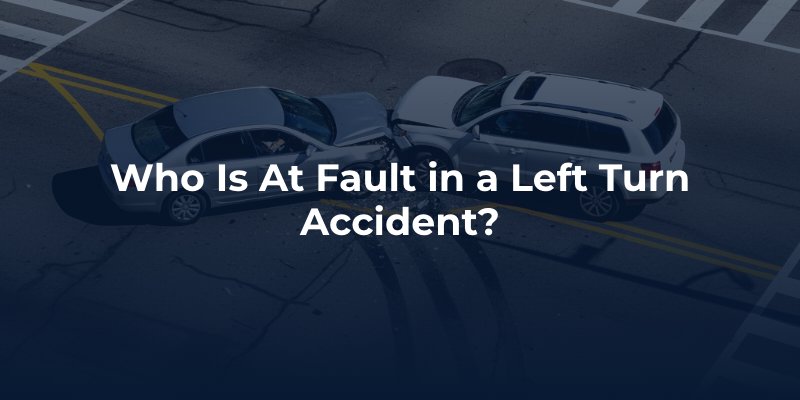
The driver making the left turn is typically found at fault because the law requires all turning drivers to wait until it is completely safe to cross oncoming traffic. Common examples include turning on a solid green light (not a green arrow) without being sure the intersection is clear, misjudging an oncoming car’s speed, or failing to yield.
Your Case Will Get
The Attention It Deserves

The Oncoming Driver
There are cases where the driver going straight shares responsibility. If the oncoming driver was speeding, ran a red light, or ignored traffic signals, they can be partly or entirely at fault for the collision.
Pedestrians and Cyclists
Pedestrians or bicyclists can also be responsible, at least in part, for a left-turn crash. If a walker or cyclist enters the crosswalk or intersection against the signal or unexpectedly crosses just as a car turns left and the car has the right of way, they might be partially at fault if they are hit by the car. It’s possible that a pedestrian or cyclist could be responsible even if they aren’t actually hit. If a driver is turning left on a green left turn arrow and the pedestrian walks into the road causing the driver to have to swerve as they’re turning, the pedestrian could be responsible for this accident.



Government Entity
In some cases, a government entity could be responsible for a left turn accident. Whichever government entity is responsible for the upkeep of roads and traffic lights has a duty to make sure the roads are safe and everything is working as it should. If the roads are unsafe or a traffic light stops working and leads to a crash, this entity could be responsible.

Construction Companies
Road construction can play a part in left-turn accidents as well. These companies may create dangerous detours, block drivers’ lines of sight, misdirect traffic with unclear setups, or leave debris on the road. Unsafe or poorly managed construction sites near intersections increase the risk of left-turn crashes.
Shared Fault
In some situations, more than one party could be at fault, including the injured driver. For example, if both parties were speeding, fault can be distributed between them.
Comparative Fault in Indiana
If you as the driver are considered to be partially at fault for the accident, it will affect your ability to obtain compensation. Indiana follows modified comparative negligence, and if the injured party is more than 50% at fault, they cannot get any compensation at all. However, if they are 50% or less responsible for the crash, they can still collect compensation but it will be reduced by their percentage of fault.
IC 34-51-2-5 Effect of contributory fault Sec. 5. In an action based on fault, any contributory fault chargeable to the claimant diminishes proportionately the amount awarded as compensatory damages for an injury attributable to the claimant’s contributory fault…
For example, if you’re in an accident and it’s determined that you were 25% at fault, your monetary award will be reduced by 25%. Proving who is at fault in a left turn car accident case is important, as it determines who you will have to seek compensation from.
The best way to make sure you’re taking the right steps is to work with an Indianapolis personal injury lawyer who has experience with these cases. Reach out to our firm today to schedule a free consultation with a left turn accident lawyer.